
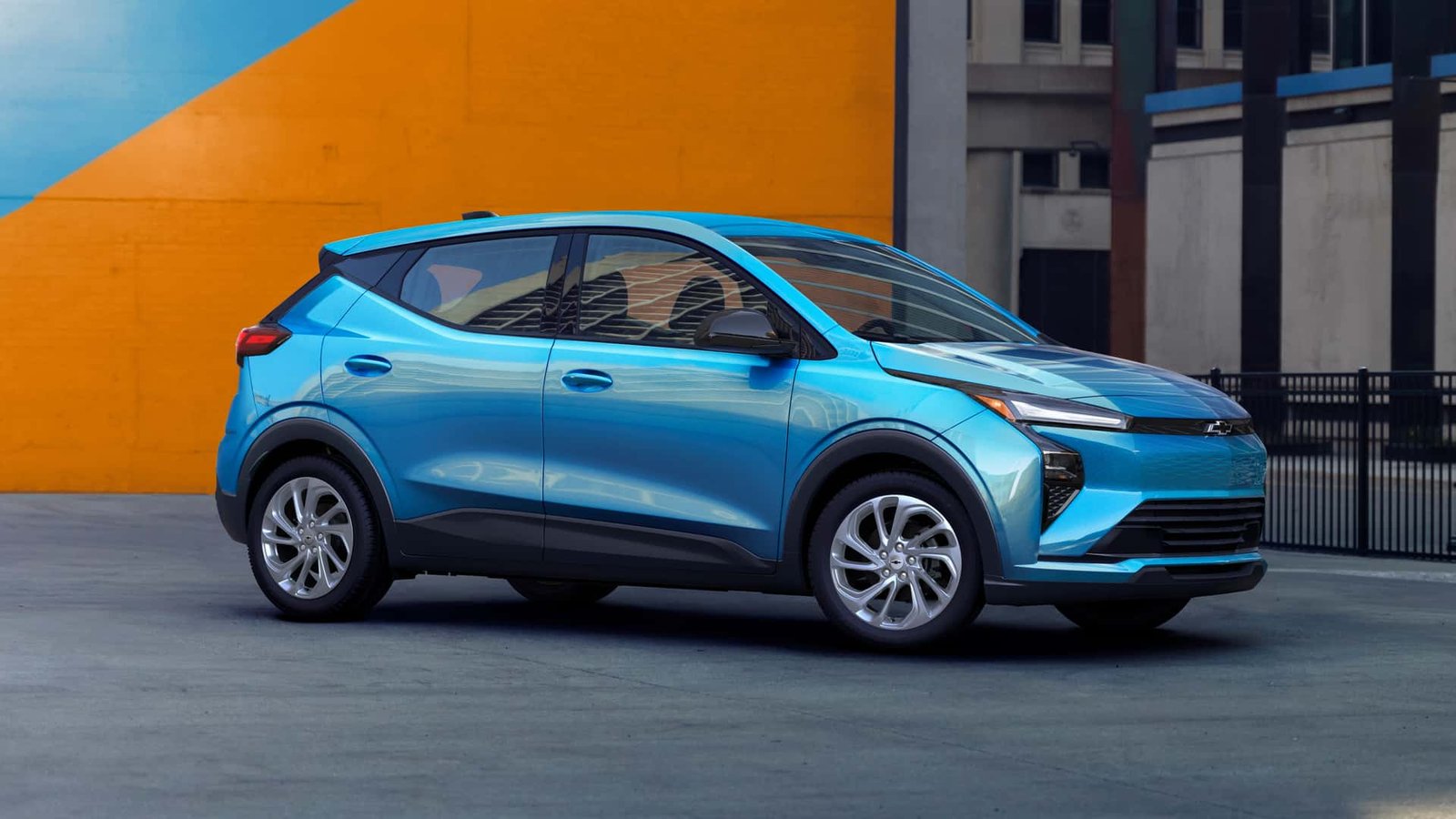
The Evolution of the Chevrolet Bolt
General Motors has made significant strides in enhancing the charging performance of its 2027 Chevrolet Bolt. Through over 100 fast-charging tests across nine different networks nationwide, the automaker has worked to improve the vehicle\’s ability to charge quickly and efficiently. This effort marks a major leap from its predecessor, offering a more practical option for drivers who rely on their vehicles for long-distance travel.
A Major Upgrade in Charging Capabilities
The new 2027 Chevrolet Bolt is not just an incremental update—it represents a substantial improvement over its earlier model. One of the most notable changes is the adoption of a Tesla-style charging port, which allows for seamless access to a vast network of fast chargers. Additionally, the vehicle now supports significantly faster charging speeds, making road trips more convenient and less stressful.
In previous models, the Bolt had a maximum charging speed of only 50 kilowatts, which meant that a full charge could take over an hour when using a DC fast charger. This limitation made the vehicle more suitable for city driving rather than long-distance travel. However, the new Bolt has addressed this issue by sharing internal components with larger General Motors EVs like the Equinox EV. As a result, the peak charging speed has increased by 2.5 times, reaching 150 kW.
This improved charging speed aligns the Bolt with other popular electric vehicles such as the new Nissan Leaf and the Ford Mustang Mach-E. It also surpasses models like the Hyundai Kona Electric and the Kia Niro EV, which are still limited to a maximum of 100 kW.
Enhanced Performance and User Experience
The previous Bolt EUV was well-received for its affordability, compact design, and a range of 247 miles. However, its relatively slow charging speeds made it less ideal for road trips, often requiring long stops at charging stations. This limitation made it more suited for urban environments rather than long-distance travel. Moreover, the lack of preconditioning meant that charging during cold weather conditions was even slower, adding to the inconvenience.
During a recent media briefing, Chevrolet’s Chief Engineer Jeremy Short highlighted the transformation of the Bolt into a more versatile vehicle. “It used to be known as a commuter car. Now it’s a bona fide road trip vehicle,” he stated. This shift in perception is largely due to the improvements in charging capabilities and overall performance.
While the increase in range is modest—rising from an EPA-estimated 247 miles to GM-estimated 255 miles—the real improvement lies in the charging time. The new Bolt can now achieve a 10-80% charge in just 26 minutes, making it much more practical for longer journeys.

Owners will have to separately purchase CCS to NACS adapters if they want to charge at non-Tesla networks like Electrify America, ChargePoint, etc. Plug and charge—the ability to just plug the cable into the charging port and walk away without manually activating the session—will also improve the charging experience.
At launch, only select GM Energy-EVgo stations will have that capability, but plug and charge at Tesla Superchargers and several other networks will come soon, a Chevrolet spokesperson said.
Getting to this point was not easy. The company conducted four development cycles with the new Bolt, each covering 3,000 miles between Michigan and California, across hot and dry conditions for testing and validation. That included 117 charging sessions over nine different networks.
After all that driving, the average consumption was 3.1 miles per kilowatt-hour, the company said.

There are many more improvements beyond just faster charging speeds. Even though the Bolt looks similar to its predecessor, the upgrades are extensive underneath. More than 50% of the components are new or modified. “In the interest of bringing the Bolt back quickly, we kept the structural steel components and the sheet metal the same,” Short said.
Still, he added that it\’s pretty much a new car underneath. The new components include the X76 electric drive unit, new 65-kilowatt-hour lithium-iron-phosphate (LFP) battery, new brake modules, as well as the Global B electrical architecture, which GM also calls its Vehicle Intelligence Platform (VIP) for functions such as faster over-the-air upgrades.
However, some of the visual similarity and carryover chassis components likely helped GM keep costs low—the Bolt starts at just $29,990 at launch, including destination, making it America’s cheapest new EV.

Inside, it also gets a large 11-inch gauge cluster, along with an 11.3-inch infotainment with Google built in. Even though Android Auto and Apple CarPlay are missing, as on other GM EVs, InsideEVs testing found that the native Google system is quite capable. The native Google Maps will show charging stations along the route and will also work seamlessly with the available hands-free Super Cruise.
When the new Bolt goes on sale in January 2027, its main competitor will be the Nissan Leaf, which is also very capable and priced competitively, starting at $31,485 with destination. But other than the Leaf, the new Bolt won’t have much competition at launch. It should be uniquely positioned to help GM’s EV business thrive as the $7,500 federal tax credit is now dead.
However, buyers may have to move fast because GM also said that the new Bolt will be a “limited run” model only, despite the company saying that it doesn’t have any production constraints. So if you were waiting for it, you may want to act sooner rather than later.
Have a tip? Contact the author: suvrat.kothari@insideevs.com
- The 2027 Chevy Bolt Will Be ‘Limited Run’ Only
- 2027 Chevy Bolt: Meet America\’s Cheapest New EV
- 2027 Chevy Bolt EV: This Is It Way Before You\’re Supposed To See It
- The Original Chevy Bolt EV Is Slow. These Guys Turned Into A Race Car Anyway
A New Era for the Chevrolet Bolt
The 2027 Chevrolet Bolt is the first model in the Chevrolet lineup to come with the Tesla-style North American Charging Standard (NACS) port built-in from the factory. This feature ensures that owners can easily access thousands of Superchargers across the country without the need for additional adapters or modifications.
With these advancements, the Bolt is no longer just a city car but a viable option for drivers who need a reliable and efficient vehicle for both daily commutes and extended road trips. The combination of improved charging speeds, enhanced range, and user-friendly features positions the 2027 Chevrolet Bolt as a strong contender in the evolving electric vehicle market.

Leave a Reply
You must be logged in to post a comment.