
German Chancellor Challenges EU’s 2035 Internal Combustion Engine Ban
German Chancellor Friedrich Merz has made a strong statement against the European Union’s proposed ban on new internal combustion engine (ICE) vehicles by 2035. This move, which aims to phase out all non-electric cars from the market, has been under scrutiny and is now facing significant opposition from within Germany.
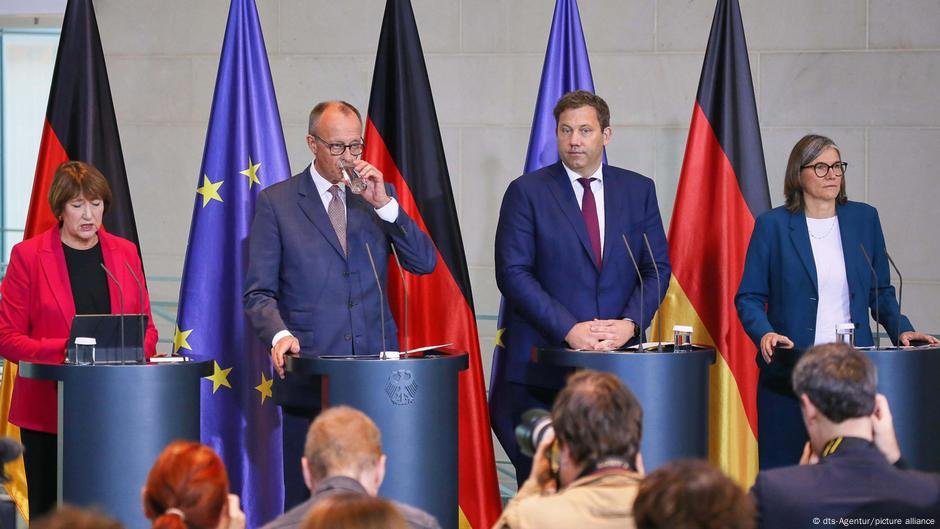
Merz addressed a summit with other political leaders and representatives from the struggling automotive industry in Germany. He emphasized his stance that the strict cutoff in 2035 would not happen if he had any influence over it. “I will do everything I can to prevent this,” he said during the meeting in Berlin. His remarks came as activists from Greenpeace and Fridays for Future gathered outside the chancellery, protesting against the potential shift in policy.

In addition to Merz, Social Democrat Deputy Chancellor Lars Klingbeil also showed openness to revising the current plan. He pointed out that certain vehicle types, such as plug-in hybrids and range extenders, could play a role in the transition. These vehicles combine electric motors with traditional fuel sources, offering an alternative to fully electric models.
Both Merz and Klingbeil highlighted the importance of maintaining and expanding incentives for electric vehicle buyers. They mentioned continued road tax exemptions and a new initiative aimed at making electric cars more accessible to lower-income consumers. However, they acknowledged that electric vehicles are still more expensive than their conventional counterparts, especially when considering tariffs on Chinese-made models.
Industry Struggles and Economic Concerns
Germany\’s automotive sector, once a global leader, is facing numerous challenges. The industry is grappling with increased competition from China, declining demand in Europe, trade barriers in the US and China, and the ongoing shift toward electric vehicles. A recent study revealed that over 50,000 jobs were lost in the car sector in 2024 alone.
The EU set the 2035 target in 2022, but many industry leaders have questioned its feasibility. Electric vehicles remain more expensive than traditional ones, with limitations in range and charging times. Additionally, long-term concerns about battery lifespan, replacement costs, and environmental impacts of disposal or recycling are still not fully understood.
Despite these challenges, the market share of electric vehicles in Germany is growing, supported by various incentive programs. However, only 19% of new car registrations in August 2024 were battery electric vehicles (BEVs), while 11.6% were plug-in hybrids. Most of these vehicles fall into higher price ranges, making them inaccessible to many consumers.
Diverging Opinions Within Germany
The response to Merz’s announcement has been mixed. The co-chair of Germany’s Greens, Katharina Dröge, criticized the decision, calling it a setback for climate protection and the automotive industry. She argued that backing away from the 2035 deadline would create uncertainty among consumers and investors.
However, some politicians and industry figures have welcomed the change. Winfried Kretschmann, the state premier of Baden Württemberg, which is home to Mercedes and Porsche, supported the move, stating that achieving 100% electromobility by 2035 is not feasible. He suggested that hybrid vehicles would be necessary as a temporary solution.

Similarly, Olaf Lies, the state premier of Lower Saxony (home to Volkswagen), praised the decision. He emphasized the need to continue promoting electric vehicles while allowing hybrids to play a longer role in the market. The chairwoman of the IG Metall trade union expressed cautious optimism, noting that the summit provided some confidence in addressing the industry\’s challenges.
A group called KlimaWirtschaft, which translates to Climate Economy, was more critical of the plans. Its chairwoman, Sabine Nallinger, argued that the debate over green fuels and range extenders might confuse potential buyers and dampen enthusiasm for electric vehicles.
Conclusion
As the EU continues to review its 2035 target, the debate over the future of the automotive industry in Germany remains intense. While some see the push for electric vehicles as essential for climate goals, others argue that a more gradual transition, including the use of hybrid technologies, is necessary to sustain the industry and protect jobs. The outcome of this discussion will likely shape the future of mobility in Europe.

Leave a Reply
You must be logged in to post a comment.