
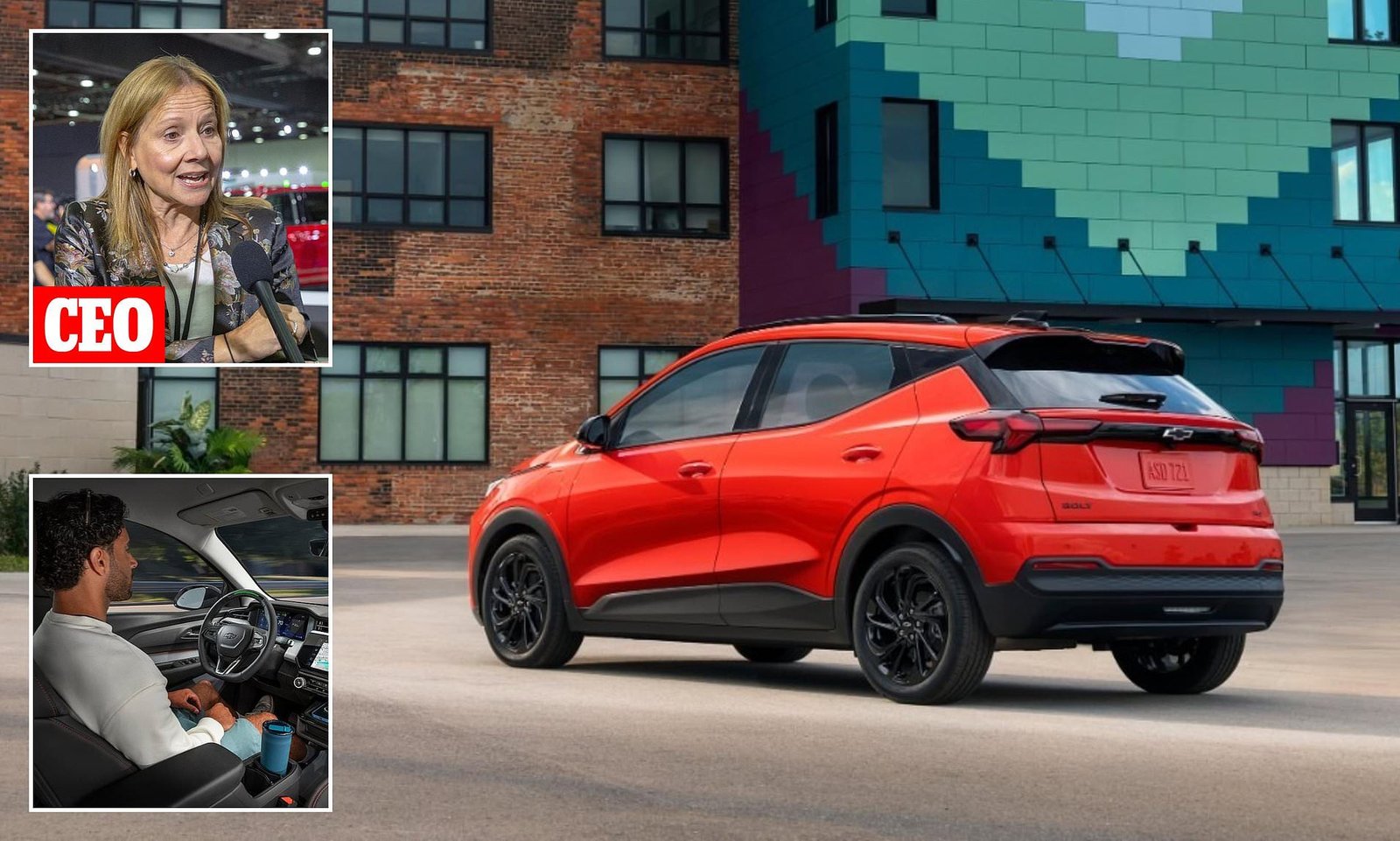
The Return of the Chevrolet Bolt
A top-selling car is making a comeback after a three-year hiatus — and it\’s already reshaping GM\’s production lines. On Wednesday, Chevy unveiled the new Bolt, its pint-sized electric vehicle. The car, built in GM\’s sprawling Fairfax Assembly plant in Kansas City, is slated to hit US driveways early next year from $28,995.
But, in order to revive the brand, GM has had to end production on two gas cars to make room for the Bolt: the mid-sized Cadillac XT4 SUV and the muscular Chevy Camaro. The revival of the Bolt is a shot in the arm for an EV market that\’s been struggling to rein in soaring prices and navigate shifting federal policies.
First launched in 2016, the Bolt was meant to be a niche hatchback, offering 200 miles of range for about $30,000 — roughly the cost of a Toyota RAV4 or Chevy Equinox. But it became an unexpected hit. In 2023 — its last year of production — Chevy sold more than 62,000 Bolts, and buyers wept when GM pulled the plug.
The automaker shelved the Bolt to free up assembly lines for a range of $100,000-plus electric heavyweights, including the GMC Hummer EV, Chevy Silverado EV, GMC Sierra EV, and Cadillac Escalade IQ. 


GM was also rolling out new battery tech that made the Bolt\’s 2016 architecture outdated. Still, CEO Mary Barra promised the SUV version of the Bolt would be back. With Wednesday\’s reveal, she\’s delivered. The redesigned car looks nearly identical to the old version but boasts a 25 percent range increase, now at 252 miles.
\”The Chevrolet Bolt was the industry\’s first affordable mass-market, long-range EV,\” Scott Bell, a Chevy VP, said. \”It commanded one of GM\’s most loyal customer bases thanks to its price, versatility, and practicality.\”
Shift in EV Strategy
GM\’s move underscores how US automakers are pivoting on EV strategy now that federal tax credits have expired. Before September 30, the federal government was offering $7,500 tax credits to drivers who bought a new EV, so long as the car was largely built in the US. 


After years of chasing Tesla, Rivian, and Lucid with massive luxury SUVs that qualified for the credit, carmakers are starting to lean back into smaller, cheaper models as shoppers grow weary of bloated vehicles and sticker shock. Nissan reworked its classic EV, the Leaf. It\’s now a $30,000 SUV with more than 300 miles of range. Toyota is reviving the C-HR as a $35,000 EV. Ford is shifting its EV production to add a small $30,000 truck.
Rivian has a $45,000 SUV on the way. Tesla just unveiled a cheaper base model. Even Jeff Bezos entered the small EV game, backing startup Slate, which aims to produce a tiny pickup with a $25,000 base price.
\”The biggest issue is consumer affordability,\” David Whiston, an automotive analyst at Morningstar, told the Daily Mail. \”The EV credit expiration will slow adoption, but the industry continuing to reduce battery and manufacturing cost will eventually make EVs desirable.\”
Questions Surrounding GM\’s Strategy
Why has the affordable Chevy Bolt become GM\’s electrifying comeback strategy amid luxury car cutbacks? Is GM set to revolutionize the EV market with ultra-affordable battery solutions for electric SUVs and trucks?
Could Chevy\’s decision to protect the Camaro name hint at an electrifying transformation into an SUV—will GM revamp it like the Mustang Mach-E? Did Chevrolet\’s iconic Malibu, famed for its star-studded appearances, fall victim to the EV revolution?
Will Ford\’s bold technological gamble with the new EV pickup capture the market\’s heart or face stiff competition from industry giants like Rivian and GM?

Leave a Reply
You must be logged in to post a comment.